

How Long Does Depression Treatment Take? Understanding to Never Give Up | Safe and Sound
How long it takes to recover from depression is a question that worries many people, especially when they have been taking medication or therapy for some time but their symptoms haven't significantly improved. Depression isn't like a pain that can go away after a few doses of medicine; the recovery process usually requires time, monitoring, and appropriate adjustments.
Understanding the treatment timeline helps patients reduce anxiety, avoid stopping medication prematurely when they feel better, and be more persistent with their professional support plan. This article will help you understand the stages of depression treatment, when medication starts to take effect, and the factors that influence the recovery process.
How long does it take to recover from depression?
There is no single timeline for all people with depression. Some people improve relatively quickly, but others need more time to stabilize their emotions, sleep, energy, and ability to function daily.
The duration of treatment often depends on many factors such as the severity of symptoms, history of depression, risk of relapse, response to medication, and cooperation during treatment. Therefore, instead of just asking "how long will it take to recover," patients should focus more on whether their symptoms are gradually decreasing, whether their daily lives are improving, and whether the treatment plan is appropriate.
It's important to note that feeling better doesn't mean you should stop treatment. Even when symptoms subside, patients may still need to continue with a maintenance phase to limit the risk of relapse. Stopping medication or treatment prematurely can cause the condition to return and become more difficult to manage.
>> See also: Distinguishing between ordinary anxiety and anxiety disorders: Do you know?
What are the typical stages of depression treatment?
The treatment process for depression typically doesn't follow a straight line from onset to complete recovery. Instead, patients usually go through several different stages, each with its own specific goals.
Understanding these stages helps patients and their families have more realistic expectations about the treatment duration while avoiding anxiety or disappointment when symptoms don't improve as quickly as hoped.

Acute treatment phase: improvement of key symptoms
This is the initial stage of treatment, often referred to as the goal of helping patients alleviate symptoms that directly affect their lives. Patients may not see immediate improvement in the first few days, especially when using antidepressants, as the body needs time to respond.
At this stage, doctors or specialists typically monitor for symptoms such as
- The level of sadness, emptiness, or despair.
- The ability to sleep, eat, and maintain energy levels.
- Level of interest in daily activities.
- The ability to concentrate, study, and work.
- Negative thoughts, feelings of helplessness, or the risk of self-harm.
It is important during the acute phase that patients do not prematurely self-assess that "the treatment is not working" or "the medication is ineffective." If symptoms do not improve, or if unpleasant side effects or worsening emotions occur, patients should discuss this with their doctor for appropriate adjustments.
Maintenance phase: stabilization after symptoms have subsided.
When symptoms subside, many people easily assume they are cured and want to stop treatment. However, this is a crucial stage, as improved mood does not necessarily mean the depression has completely stabilized. Maintaining treatment helps reduce the risk of symptoms returning in the initial period after improvement.
The maintenance phase typically focuses on:
- This helps to stabilize your mood, sleep, and energy levels.
- Helping patients return to their normal routines of studying, working, and living.
- Monitor for early signs of recurrence, if any.
- Strengthen mental health care skills.
- Avoid stopping medication or discontinuing treatment prematurely without consulting a doctor.
Simply put, this phase is like a "foundation-building" period after the patient has overcome the most difficult stage. If treatment is stopped too early, the patient may easily fall back into a cycle of fatigue, insomnia, sadness, or loss of motivation.
Long-term treatment phase: when there is a high risk of recurrence.
Not everyone needs long-term treatment. However, for some people, doctors may consider monitoring or maintaining treatment for a longer period to reduce the risk of relapse. This doesn't mean the patient is "incurable," but rather that their condition needs more careful protection to maintain stability.
Long-term treatment may be considered when the patient:
- I have suffered from depression many times.
- Have you ever had thoughts or behaviors that could harm yourself?
- There are symptoms of severe or prolonged depression.
- There may be an underlying physical or mental health condition.
- Slow response to treatment or relapse after discontinuation of treatment.
The goal of long-term treatment is not to unnecessarily prolong treatment but to help patients reduce the risk of recurring depressive episodes in the future. Therefore, the duration of treatment should be determined based on professional assessment and should not be based on the feeling of "getting better" to stop medication or discontinue monitoring.
How long does it take for antidepressant medication to work?
Antidepressants typically don't produce the same immediate effects as pain relievers. Many people may need several weeks before they begin to notice more noticeable changes in mood, sleep, energy levels, or concentration.
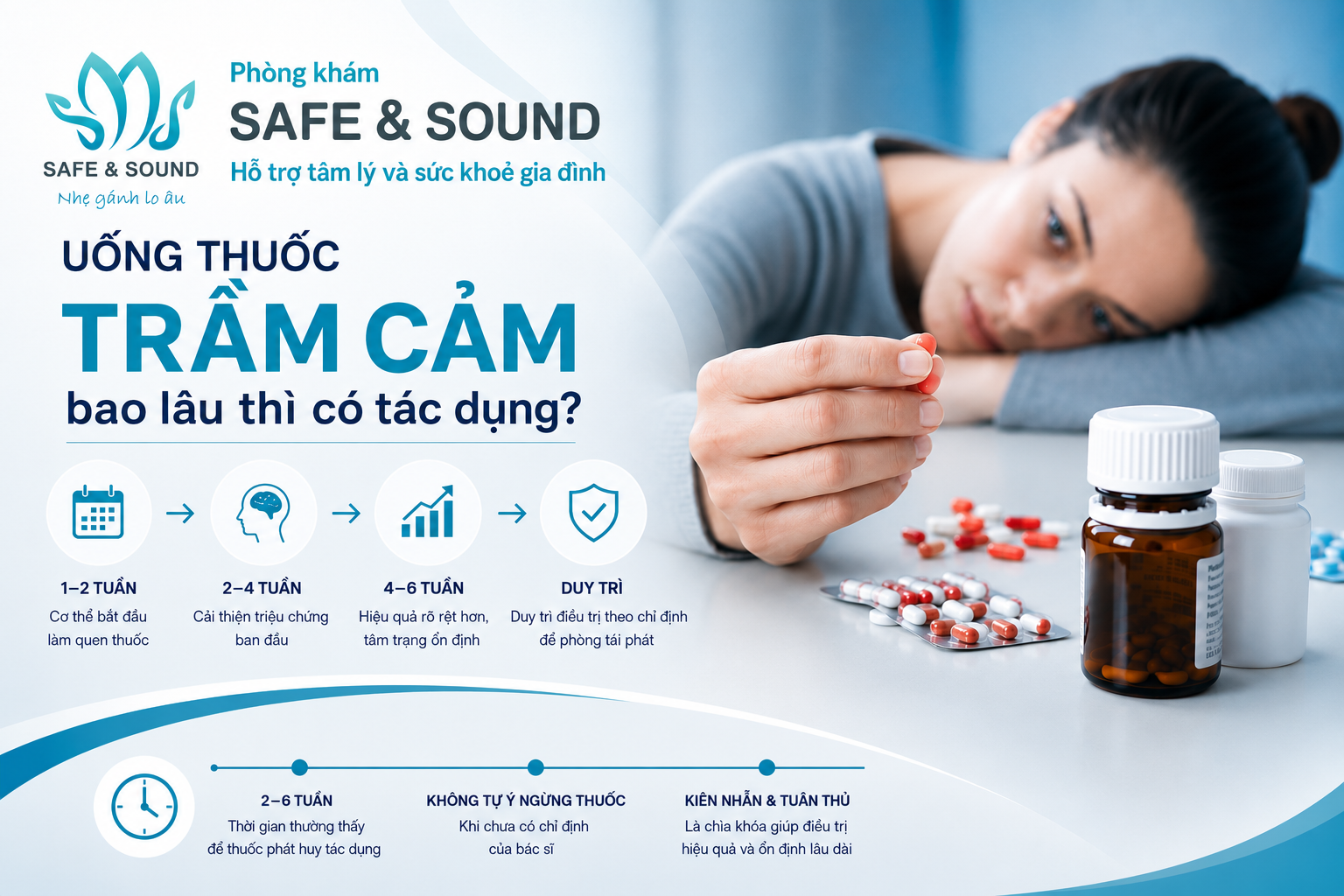
Initially, not seeing immediate improvement doesn't mean the medication isn't working. The body needs time to adapt, and the doctor also needs to monitor the patient's reaction before assessing the treatment's effectiveness.
Patients should note:
- Do not increase, decrease, or stop taking any medication without consulting your doctor.
- Don't conclude too soon that a medication is ineffective if it has only been used for a short time.
- You should inform your doctor if your symptoms do not improve, if you experience unpleasant side effects, or if your emotions worsen.
- It is important to attend follow-up appointments as scheduled so that the treatment plan can be adjusted if necessary.
Medical treatment requires professional supervision. Self-treatment based on subjective feelings can prolong the recovery process or increase the risk of relapse. Patience during this period is crucial for achieving lasting treatment results.
>> See also: What are the advantages and disadvantages of treating depression with medication?
Factors affecting the duration of depression treatment
Although diagnosed with depression, the duration of treatment can vary greatly from person to person. Some respond well after the initial phase, while others require adjustments to the treatment approach or longer monitoring.
Several factors commonly affect treatment duration, including:
|
Element |
Impact on the treatment process |
|
Level of depression |
The more severe the symptoms, the more closely the patient needs to be monitored and supported. |
|
History of depression |
People who have experienced depression multiple times may have a higher risk of recurrence. |
|
Drug response |
Some people improve quickly, but others may need adjustments to their medication or supportive treatment. |
|
Treatment adherence |
Taking medication as directed, attending follow-up appointments, and maintaining treatment will help facilitate a smoother recovery process. |
|
Physical health and associated problems |
Other medical conditions or underlying mental health issues may complicate treatment. |
|
Living environment and support |
Family, work, life pressures, and the support system around you can all affect your ability to recover. |
Therefore, patients should not compare their treatment time with others. It is important to monitor their own progress and communicate regularly with their doctor or treatment specialist.

When might longer-term treatment for depression be necessary?
A longer treatment doesn't necessarily mean the patient won't recover or that their condition is more serious. In many cases, it helps ensure a safer recovery, especially when the patient has experienced relapses, has severe symptoms, or needs more time to stabilize their emotions, sleep, energy, and daily activities.
Patients may require longer treatment if:
- Having experienced depression multiple times: the risk of relapse may be higher, so your doctor may consider a longer-term maintenance plan.
- Severe depression, or depression that significantly impacts life, may require a longer time for the patient to recover emotionally, energetically, and functionally.
- Having thoughts of self-harm or suicidal ideation: this is a situation that needs to be closely monitored to ensure safety.
- If there are underlying medical conditions or health problems, treatment may require a more comprehensive approach.
- Recurrent symptoms or slow response to medication: your doctor may need to reassess the treatment plan, adjust the medication, or extend the follow-up period.
Longer treatment does not mean patients will be dependent on treatment forever. The goal is to help patients achieve stable recovery, reduce the risk of relapse, and provide a better foundation for returning to daily life.
>> See also: How do symptoms of depression differ in women and men?
Conclude
How long does it take to cure depression? There isn't a single answer for everyone. The treatment time depends on the severity of symptoms, medical history, response to treatment, risk of relapse, and patient compliance.
It's important not to stop taking medication or discontinue treatment on your own just because you feel better. Instead of focusing solely on "how long it will take to recover," patients should pay attention to their gradual improvement, attend follow-up appointments as scheduled, and discuss any unusual symptoms with their doctor.

If you or a loved one is being treated for depression and feeling overwhelmed by the slow recovery process, seeking support from a mental health professional is essential. At SNS (Safe & Sound Clinic), patients can receive personalized listening, assessment, and support tailored to their individual needs.
